02 / A material decision
A little
grain of
thought.
How one exposed plywood edge turned into a much bigger material decision.
Start at the edge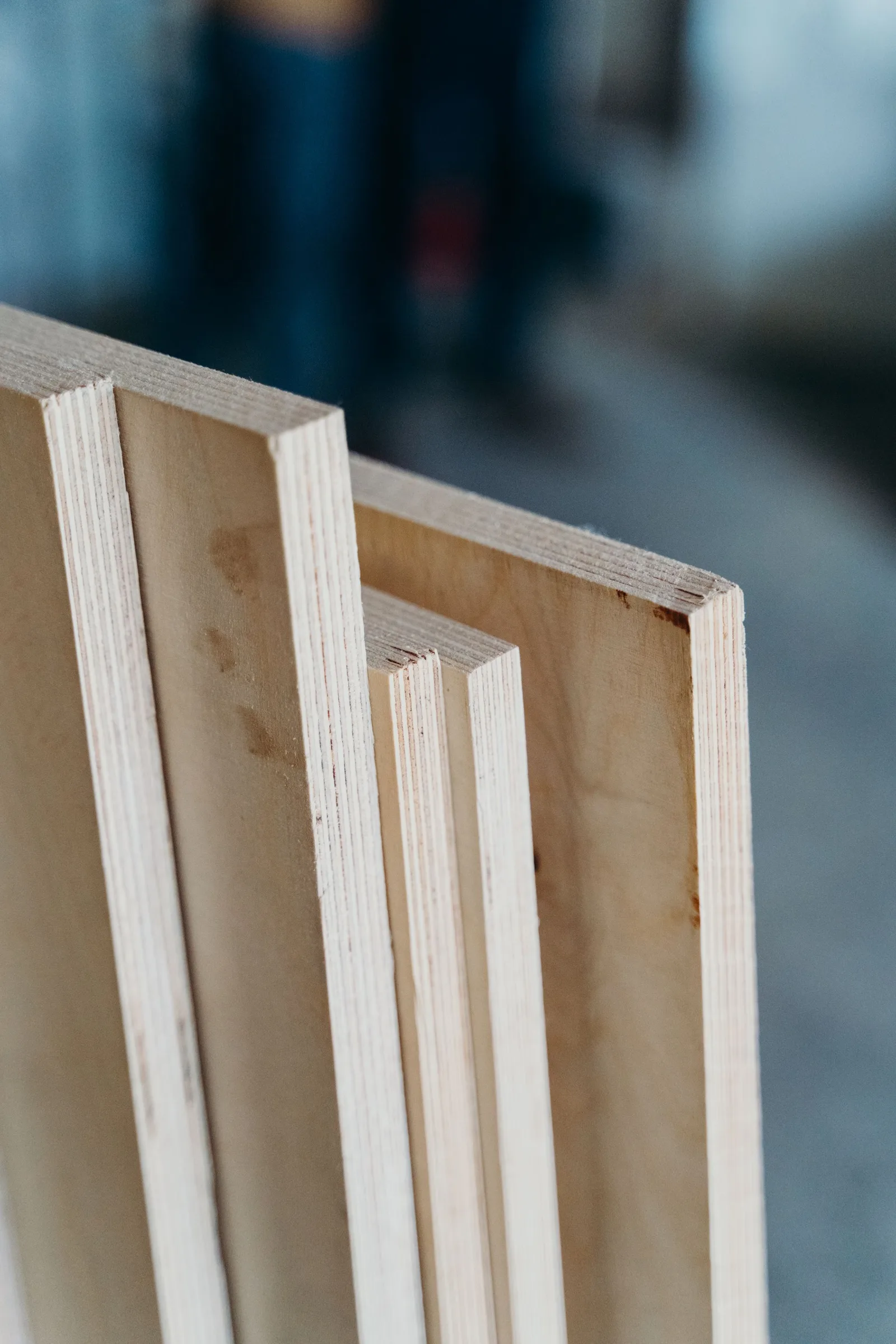
Worth showing,
even when we don’t.
The bit I don’t
want to cover up.
I wanted the plywood edge of the Little Range to stay visible.
Plywood edges are often covered or finished over. I liked the opposite idea. If the layers were going to be there, I wanted to choose a plywood good enough to let them become part of the kitchen.
At the same time, I was getting more attached to the colours.
Blood red, butter, fern: the painted versions wanted to be bold, which meant covering up most of the plywood I’d wanted to show off.
I liked both ideas enough to keep them. The painted kitchens would let colour carry the character; Good Wood would leave more of the plywood exposed. I wanted the same sheet underneath both, not one plywood for the parts you could see and something cheaper for the parts you couldn’t.
So I went looking at the wood.
A change
of direction.
Thin sheets of wood, with the grain turned across neighbouring layers. A small change of direction that helps the panel hold its shape.
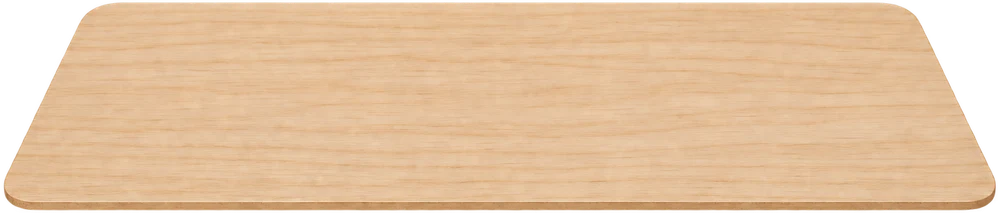
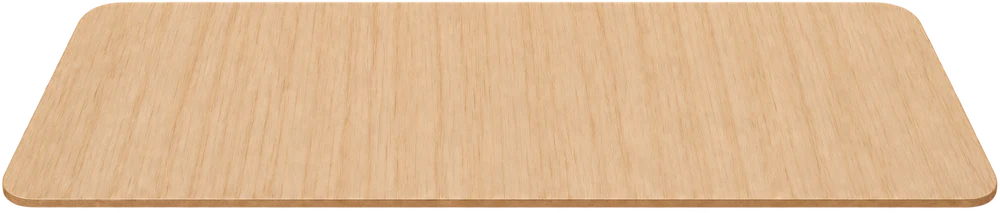
A generated cross-grain illustration.
Layer count varies with the panel.
Each one has
a job to do.
Plywood is made by bonding thin sheets of wood under heat and pressure, usually alternating the grain direction. This helps the panel hold its shape and carry loads in both directions, though moisture can still affect it. [1]
There’s something satisfying about a plywood edge. Those stripes are the layers of timber doing what plywood does, but once you decide not to disguise them they become part of the design.
That changes what I want from the sheet. The face matters, but so does the core. The machining matters. The glue line matters. The way the edge sands and finishes matters.
Good Wood makes all of that obvious because the timber is doing most of the visual work.
On the painted kitchens colour takes over, but I still like knowing what’s underneath it. Using a better plywood only where it can be seen would feel backwards to me.
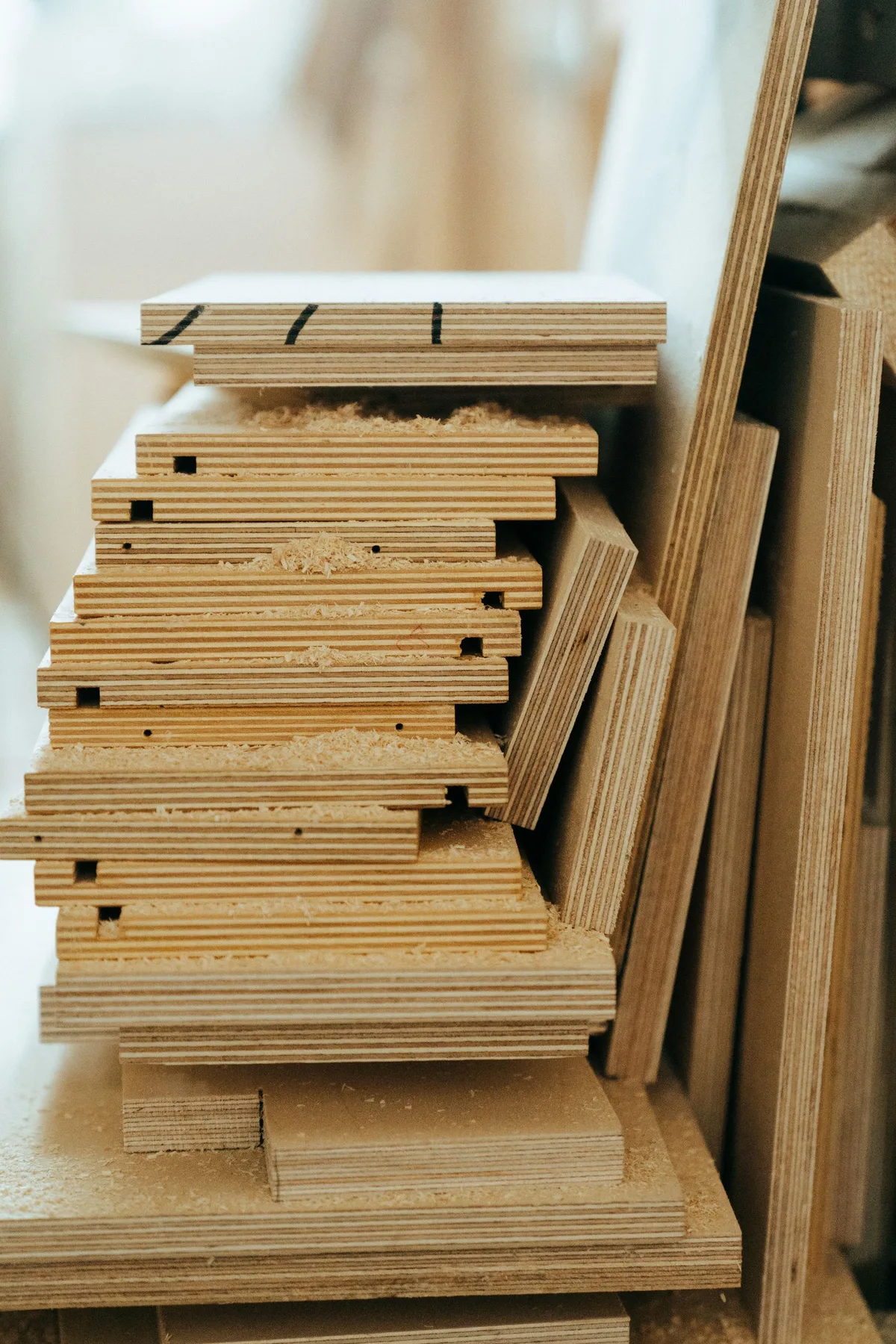
Same plywood,
more of it showing.
Where the timber
gets more room.
Good Wood isn’t the neutral option. It’s the version where more of the material stays visible.
The painted kitchens use colour as a big part of their character. Good Wood goes the other way. The pale faces stay exposed, the layered edges remain visible, and the darker trim is made from the same plywood stained to a walnut tone.
That gives us contrast without a second timber.
So the question became less “what plywood has a nice exposed edge?” and more “what plywood do I want this kitchen to be made from?”
Yes, I’ve seen
the price of wood.
A funny time
to fall for timber.
Timber has been an awkward material to price in recent years.
Construction demand, supply constraints, war, trade measures and freight have all moved parts of the market around. [2] [3] [4]
Old prices and internet listings only tell me so much. What counts is what the sheet I need costs from the supplier I use, when I need it. Still, I wanted a sense of the territory.
And what
about birch?
Birch has the pale colour I wanted, a clean striped edge and a long association with furniture and interiors. If I were choosing on appearance alone, the search might have ended there.
But once I looked past the edge, another question crept in: where was the plywood coming from?
The birch plywood I was looking at is imported. Nothing wrong with that, but it made me wonder whether an Australian timber could do the same job.
Hello,
hoop pine.
Araucaria cunninghamii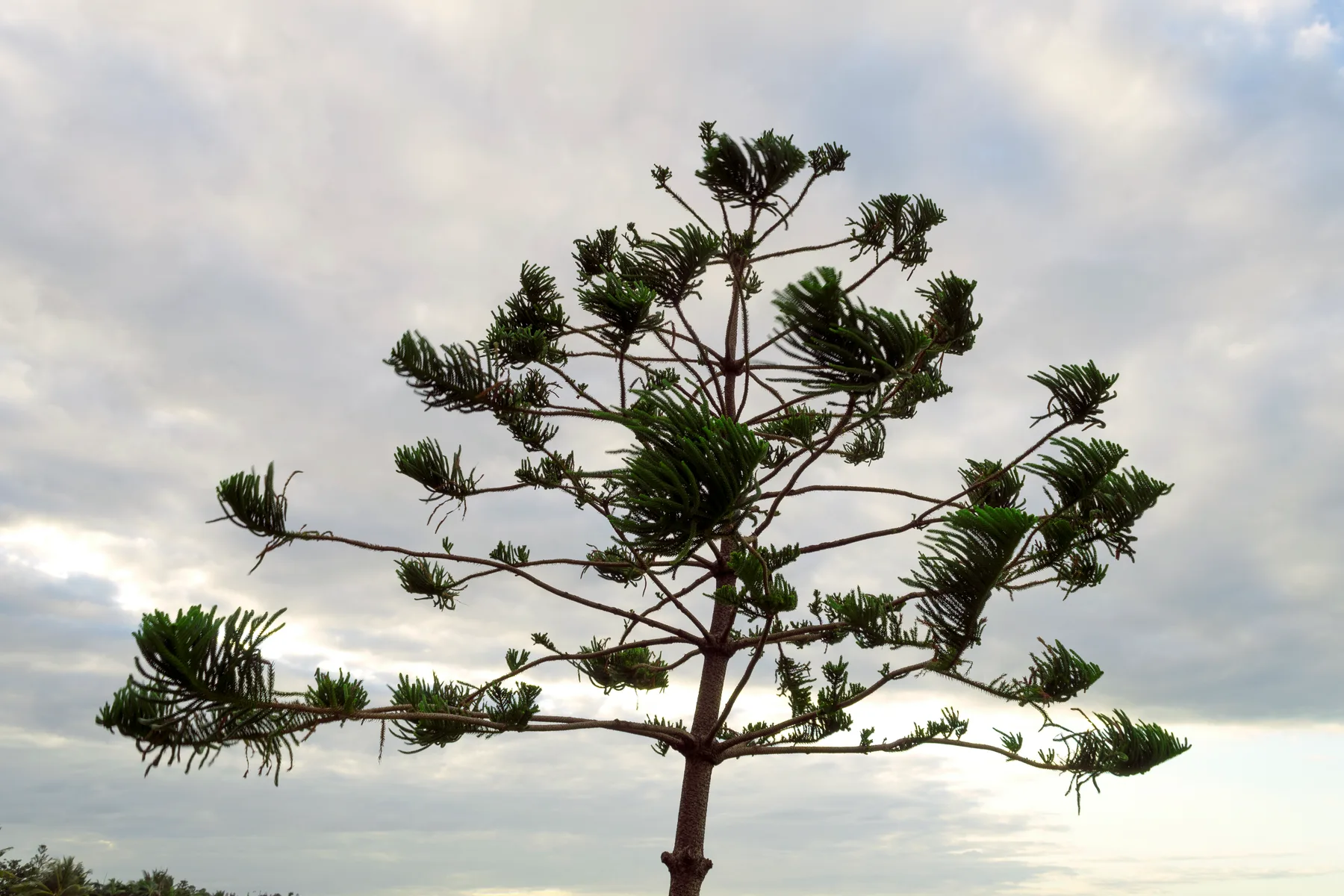

Australian hoop pine.
Marine-grade plywood.
That search eventually led me to Australian hoop pine.
It gave me the things I wanted when the plywood was visible: a pale face, a clean layered core and a grain that could carry Good Wood without needing much help.
Hoop pine has a fine, even texture and generally straight grain. WoodSolutions describes it as a timber that machines well and takes paint and stain well. For a kitchen that needs to look good both painted and with its timber showing, those are useful qualities. [6]
Australian manufacture is another reason for the choice. Austral, for example, makes marine hoop pine plywood in Brisbane using logs from Queensland plantations. It specifies an A-grade multiply core and a phenolic A-bond. Those are published specifications I can use when comparing panels; they aren’t a substitute for checking the material itself. [7]
The darker trim is the same hoop pine plywood, stained to a walnut tone.
On the painted kitchens most of that character sits under the colour, but the sheet machines the same way and the edges still have to finish. I didn’t want Good Wood to get one plywood because it was exposed while the painted kitchens got something else because nobody would see it.
And I wouldn’t weaken the colours to show more timber. Blood red should be red, butter should be butter, and fern should be allowed to carry the room.
It’s an indoor kitchen, marine-grade plywood or not. The finish and the safety testing are their own jobs, and they come later.
Good wood for
everyday things.
After all that talk about veneers, glue lines and timber prices, the material still has a fairly ordinary job to do.
The plywood works with the rounded edges and painted finish, and with the threaded inserts that let the kitchen come apart and go back together.
It will become doors opened again and again, a worktop covered in cups, and something being cooked that I’ll eventually be expected to eat.
There’s still plenty to resolve on the Little Range, but the timber decision is made.
More soon,
A few things
worth reading.
Research checked 14 September 2026.
The Little Range is still in development.
- How plywood is madeAPA — The Engineered Wood Association
- Building costs during COVIDReserve Bank of Australia, February 2022
- Russia, Belarus and Australian tariffsDepartment of Foreign Affairs and Trade
- Timber certification after the invasionForest Stewardship Council, 2022
- Australian sheet-price snapshotPlyco trade price list, effective 1 September 2026, pp. 42–46
- Meet hoop pineWoodSolutions — species guide
- Australian marine plywoodAustral Plywoods — specifications and plantation sourcing